
Number of the month 3,14

What is behind the number 3.14?
The number 3.14 is the rounded form of the circle number π. It describes the fundamental ratio between the circumference of a circle and its diameter. This ratio is the same for every circle, whether it is a tiny coin or a gigantic planet.
Why is π so special?
π is an irrational number and has an infinite number of decimal places, but that's not all:
- there are no repeating patterns: the sequence of digits appears completely chaotic.
- Not only is π itself irrational: the square root of π cannot be represented as a fraction either.
This makes π one of the most ‘resistant’ numbers in mathematics.
100% of all circles have the same ratio of circumference to diameter: π
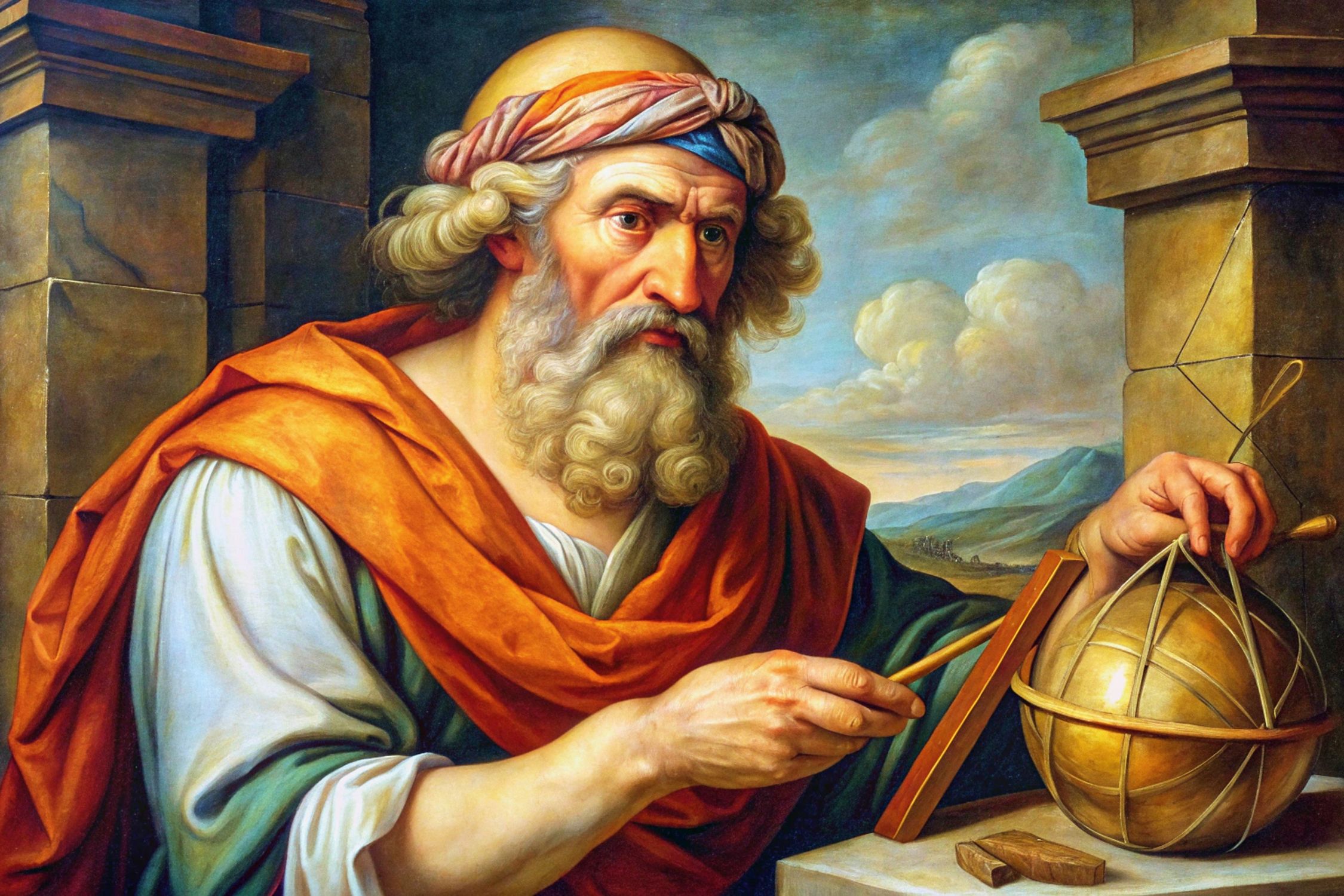
Historical background

Where do we encounter π in everyday life?
π can be found wherever there are circles – and that is surprisingly often:
- in geometry: sphere volumes, circle areas
- in physics: electricity, oscillations
- in technology: mechanical engineering, construction
- in nature: circles, spirals
A number that connects the world
The number 3.14 represents much more than just a mathematical constant. It is a symbol of the depth of mathematics and the curiosity that drives science. No wonder, then, that π gets its own holiday every year.